How Newton’s Second Law Makes the Universe Predictable | CM1
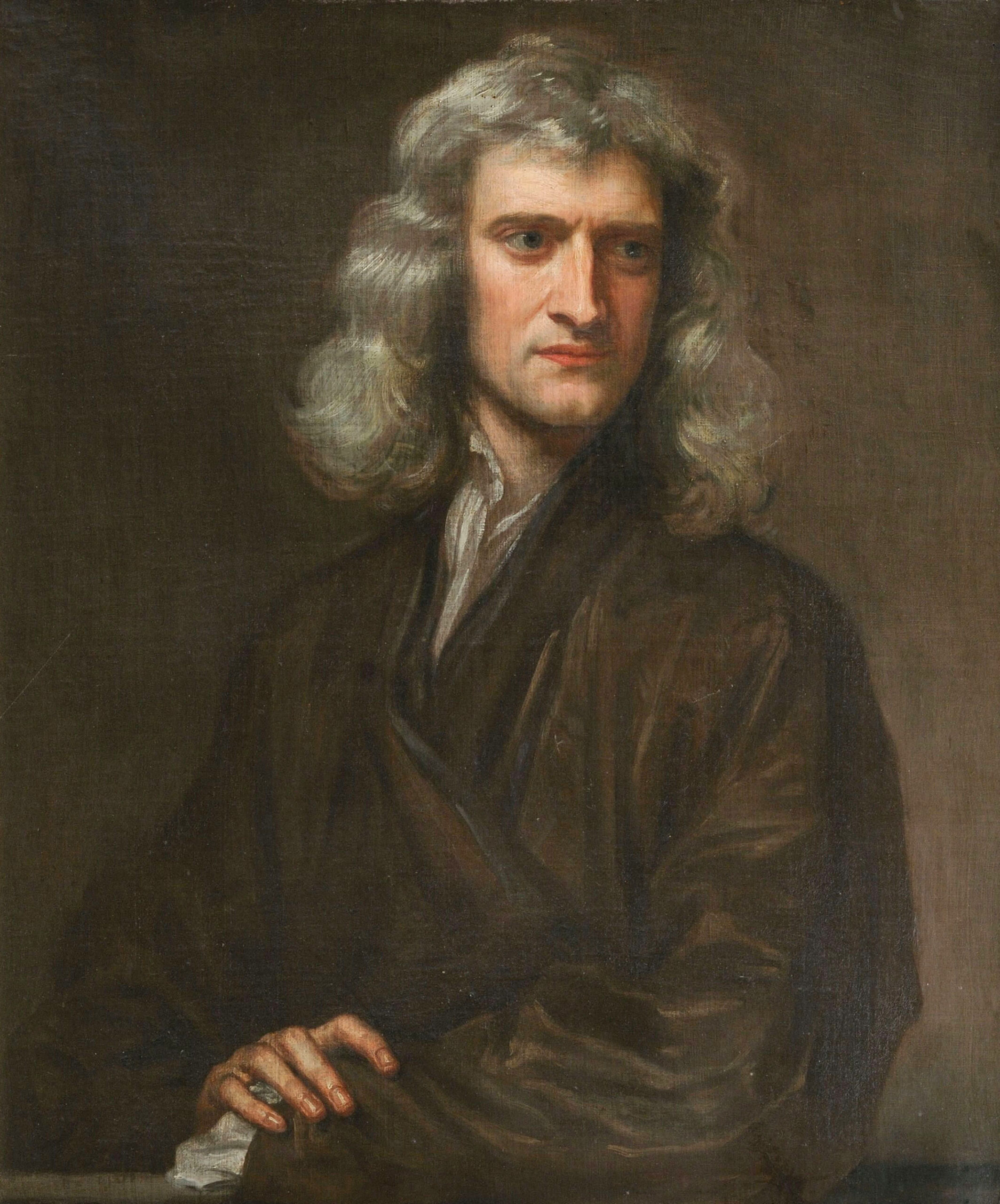
In the late 17th century, Isaac Newton fundamentally reshaped how we understand motion and the natural world. At a time when scientific discovery was accelerating, he set out to uncover the mathematical principles that govern how objects move. This effort led to the publication of Philosophiæ Naturalis Principia Mathematica in 1687, a landmark work that established the foundations of Classical Mechanics. Within this work, Newton introduced what we now call Newton’s Second Law of Motion, a powerful principle that connects forces to changes in motion. More importantly, this law does far more than present a compact formula; it reveals a deeper insight that motion follows precise mathematical rules. As a result, Newton’s Second Law gives us the power of predictability once we know the forces acting on an object, it’s present and past states of motion.
By expanding Newton’s second law down to its very derivatives, we’ve seen just how elegantly it captures the dynamics of motion, offering a framework where forces and accelerations are intimately linked and, in principle, entirely predictable. This detailed journey reinforces the remarkable power of classical mechanics; but as precise and beautiful as this predictability is, the universe holds deeper surprises. Quantum mechanics, which we’ll delve into another time, challenges this certainty, introducing a world where outcomes are probabilistic rather than guaranteed. For now, I’d love to hear your reflections: did the meticulous unfolding of Newton’s law change how you view predictability? Drop your thoughts in the comments below and let’s discuss!